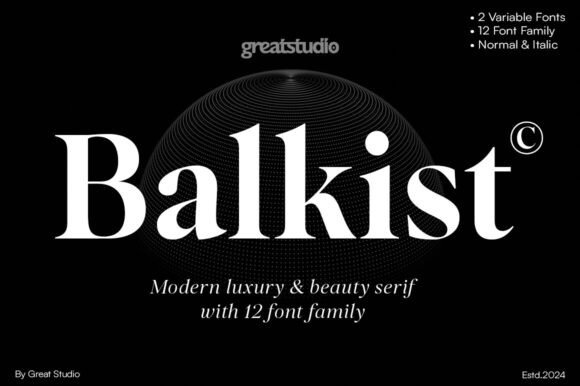
Balkist: A Versatile Typeface for Modern Design
In the ever-evolving landscape of digital and print media, typography remains one of the most critical elements in effective communication. It is not merely about selecting a font that looks good; it is about choosing a typeface that conveys the right message, evokes the desired emotion, and ensures readability across various platforms. Balkist emerges as a standout solution in this arena, offering a unique blend of transitional heritage and contemporary flair. Designed to be both harmonious and stylish, Balkist bridges the gap between classic elegance and modern utility, making it an indispensable tool for designers, brand managers, and content creators alike.
The Essence of Balkist: Where Tradition Meets Innovation
To truly appreciate Balkist, one must understand its foundational philosophy. It is classified as a transitional typeface, a category known for balancing the high contrast of old-style fonts with the geometric precision of modern designs. However, Balkist does not simply replicate history; it reinterprets it for the current era. The result is a character set that feels familiar yet fresh, capable of standing out in crowded visual environments without sacrificing legibility.
What sets Balkist apart is its approach to contrast and weight. Unlike many transitional fonts that rely on extreme thin-and-thick stroke variations which can sometimes hinder readability on screens, Balkist offers a nuanced spectrum. The natural curves found throughout the glyphs are extraordinarily weighted in the bolder versions, providing a sense of strength and authority. Conversely, the thinner weights feature lowered contrast and specific optical corrections. These subtle adjustments create a warm, soft look that invites the reader in, making long-form text feel less daunting and more engaging.
A Spectrum of Weights for Every Need
One of the most significant advantages of using Balkist is its comprehensive range of weights. From Light to Extra Bold, the typeface provides designers with the flexibility to establish clear visual hierarchies within their projects. This variety is crucial for creating dynamic layouts where different elements need to command varying levels of attention.
- Light and Regular: Ideal for body copy, these weights ensure excellent readability while maintaining a sophisticated aesthetic. The optical corrections in these styles make them particularly suitable for small sizes and dense text blocks.
- Semi-Bold and Bold: Perfect for subheadings, pull quotes, and emphasis within paragraphs. They offer enough presence to guide the eye without overpowering the surrounding content.
- Extra Bold: Designed for headlines and impactful statements, this weight delivers maximum visual impact. Its strong strokes hold up well even when scaled down for logos or packaging details.
Furthermore, Balkist features charming italics that go beyond simple slanted letters. These italics are designed with true cursive influences, adding a layer of personality and fluidity to the design. Whether used for book titles, elegant invitations, or accent text in advertising, the italic versions add a touch of grace that complements the upright styles perfectly.
Practical Applications Across Industries
The versatility of Balkist makes it suitable for a wide array of applications. Its ability to adapt to different contexts means that a single typeface family can serve multiple roles within a brand identity or a publication project. Here is how professionals are leveraging Balkist in real-world scenarios:
Editorial Design and Publishing
For magazine editors and book publishers, readability is paramount. Balkist excels in editorial design due to its open counters and balanced x-height. When setting magazine headings, the Extra Bold weight creates striking focal points, while the Light and Regular weights provide a comfortable reading experience for articles. The font's support for over 200 Latin-based languages also makes it an excellent choice for international publications, ensuring that content remains accessible to a global audience without compromising on style.
Branding and Logo Design
In the realm of branding, consistency and memorability are key. Balkist offers a robust toolkit for logo design. Its distinctive curves and varied weights allow brands to craft identities that are both unique and timeless. A startup looking for a modern, approachable feel might opt for the rounded terminals of the Light weight, while a luxury brand could leverage the high contrast of the Extra Bold to convey exclusivity. The variable versions further enhance this potential, allowing designers to fine-tune the thickness and slant of the logo to fit specific spatial constraints.
Packaging and Advertising
On product packaging, space is often limited, and the design must communicate value instantly. Balkist's clarity ensures that product names and descriptions remain legible even on small labels. In advertising campaigns, the font's ability to handle short, punchy headlines alongside longer descriptive text makes it a reliable workhorse. Whether it's a billboard, a social media ad, or a brochure, Balkist maintains its integrity across different mediums.
The Power of Variable Fonts
A notable innovation included in the Balkist family is the introduction of two Variable versions: Regular and Italic. Variable fonts represent a significant shift in how typography is utilized in digital environments. Instead of being limited to a fixed set of weights, designers can now access a continuous range of styles from a single file.
This feature allows for greater creativity and efficiency. For instance, a web designer can use CSS to animate the weight of a headline as a user scrolls, creating an interactive experience that was previously difficult to achieve. Or, a graphic designer can adjust the exact thickness of a letterform to perfect the spacing within a tight layout. By unearthing many visual tones and hidden secrets, the variable versions of Balkist empower creators to explore new aesthetic territories and refine their designs with unprecedented precision.
Evaluating Suitability for Your Project
While Balkist is incredibly versatile, it is essential to evaluate whether it is the right fit for your specific needs. Consider the following factors before integrating it into your workflow:
- Project Tone: Does your brand or publication require a formal, authoritative voice, or something softer and more inviting? Balkist can do both, but you must select the appropriate weight and style to match the tone.
- Language Requirements: If your project involves multilingual content, verify that the specific characters required for your target languages are supported. With coverage for over 200 Latin-based languages, Balkist is likely to meet most needs, but always double-check for specialized diacritics.
- Medium Constraints: While Balkist performs well in print and digital, consider the resolution and size at which it will be displayed. The optical corrections in the lighter weights are particularly beneficial for screen display, ensuring crispness even on lower-resolution devices.
Strengths and Considerations
The primary strength of Balkist lies in its balance. It avoids the pitfalls of being too trendy, which can date a design quickly, while also steering clear of being overly traditional, which might feel stale. Its harmonious structure ensures that text flows naturally, guiding the reader through the content effortlessly. The inclusion of extensive language support and variable technologies positions it as a forward-thinking choice for the modern designer.
However, like any typeface, there are considerations. Because Balkist features high contrast in its bolder weights, it may require careful kerning and leading adjustments in very small sizes to maintain legibility. Additionally, while the variable fonts offer immense flexibility, they require a certain level of technical proficiency to utilize fully. Designers unfamiliar with variable font parameters might find the learning curve slightly steeper than working with static font files.
Conclusion
In conclusion, Balkist represents a significant achievement in contemporary typography. By merging the elegance of transitional design with the practical demands of modern media, it offers a solution that is both beautiful and functional. Whether you are crafting a corporate identity, designing a magazine spread, or developing a responsive website, Balkist provides the tools necessary to create compelling visual narratives. Its wide range of weights, charming italics, and innovative variable options ensure that it remains a relevant and powerful asset in any designer's toolkit. As we continue to navigate a world saturated with information, having a typeface that communicates clearly, warmly, and stylishly is more important than ever. Balkist stands ready to meet that challenge, helping creators bring their visions to life with confidence and flair.