Builders Hot: A Practical Guide to Full-Color SVG Typography
In the realm of digital design, typography often serves as the primary vehicle for communication, yet standard single-color fonts can sometimes feel limiting for projects requiring immediate visual impact. Builders Hot represents a specific category of typeface designed to bridge the gap between simple text and complex illustration. This full-color font features a building block style rendered in a hot, summer color palette, offering designers a distinct aesthetic that mimics physical construction toys while maintaining the fluidity of digital text. For professionals and hobbyists alike, understanding the mechanics, compatibility, and strategic application of this font is essential before integrating it into a workflow.
Understanding the Builders Hot Aesthetic and Structure
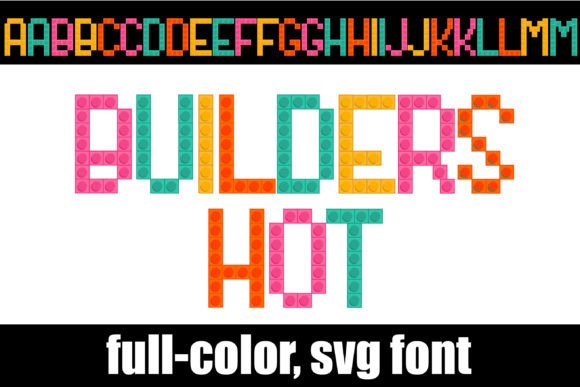
The defining characteristic of Builders Hot is its departure from traditional vector outlines filled with a single hue. Instead, it utilizes OpenType full-color SVG technology. This format allows each character to contain multiple layers of color and shape data within a single glyph file. The result is a font that looks like stacked blocks, utilizing warm tones such as oranges, reds, and yellows to evoke a sense of energy and playfulness. This "hot" palette makes the typeface particularly effective for summer-themed campaigns, children's content, or any project aiming to convey warmth and creativity.
Beyond the primary color scheme, the font includes an alternative case with additional colors accessible through system settings or Silhouette Studio's glyph map. This feature provides a layer of customization without requiring the designer to manually recolor individual vectors. However, it is crucial to recognize that this complexity comes with technical dependencies. Unlike standard TrueType (.ttf) or OpenType (.otf) fonts that rely on the rendering engine of the operating system to fill shapes, Builders Hot requires software capable of interpreting SVG data embedded within the font file. If the software cannot read this data, the intricate color layers will not render, leading to potential confusion during the design process.
Technical Compatibility and Installation Realities
One of the most significant factors when evaluating Builders Hot is the environment in which it will be used. The installation process mirrors that of a standard font; users typically install the .otf file via FontBook on macOS or through the Control Panel and preferred font managers on Windows. Once installed, the font appears in the dropdown menu of supported applications. However, the visual output depends entirely on the program's capability to handle full-color SVG fonts.
A common point of friction for new users is the preview window. In many programs, even those that support color fonts, the font may appear black in the selection list or the initial preview pane. This is a standard behavior in non-compatible viewing modes and does not indicate a broken file. The true test occurs when the user begins typing on the document canvas. If the software supports the format, the characters will instantly populate with their intended vibrant colors. Programs known to support full-color SVG fonts include Adobe products (such as Illustrator and Photoshop), Silhouette Studio, Quark, and Inkscape. Conversely, older versions of word processors or basic graphic tools may only display the glyphs as black silhouettes, rendering the unique value proposition of the font useless in those specific contexts.
Installation Best Practices
- Verify Software Version: Ensure your design software is updated to a version that explicitly supports OpenType-SVG fonts.
- Test Before Committing: Create a blank document and type a sample sentence to confirm color rendering before starting a complex layout.
- Check Export Settings: When saving files for print or web, ensure the export settings preserve SVG color data rather than flattening the image to a single color.
Comparing Builders Hot to Standard Alternatives
When deciding whether to use Builders Hot, it is helpful to compare it against standard display fonts and manual illustration techniques. Traditional display fonts offer high legibility and broad compatibility across all devices and software. They are safe choices for body text and general headlines where consistency is paramount. However, they lack the inherent graphical depth that Builders Hot provides out of the box. Achieving a similar "blocky," multi-colored look with a standard font would require a designer to manually trace letters, separate them into layers, and apply gradients or solid fills—a time-consuming process that increases file size and editing complexity.
On the other end of the spectrum are custom illustrations. While illustrations offer unlimited creative freedom, they sacrifice the editability of text. If a client requests a change in wording after a logo has been illustrated, the entire asset must be redrawn. Builders Hot occupies a middle ground, offering the editability of text (you can still change the words) with the visual richness of an illustration. This hybrid approach is ideal for titles, displays, and posters where the text itself is the focal point of the design.
However, there are tradeoffs. Because Builders Hot relies on specific rendering engines, it is less portable than standard fonts. Sending a file containing this font to a recipient using incompatible software will result in a loss of visual fidelity unless the text is outlined or converted to a raster image first. Furthermore, the playful, chunky nature of the building block style limits its readability at small sizes. It is not suitable for body copy or detailed informational text, where clarity and neutrality are required.
Strategic Use Cases and Design Applications
The strength of Builders Hot lies in its ability to add personality to designs quickly. It is particularly well-suited for projects targeting younger audiences or events associated with fun, creativity, and summertime activities. For instance, a local community center creating a poster for a summer camp could use this font to immediately signal the event's tone without needing extensive graphic embellishment. Similarly, crafters using Silhouette Studio can leverage the font to create vinyl decals for t-shirts, water bottles, or nursery decor, where the multi-layered colors translate well into cut files if the software handles the layers correctly.
In professional branding, the font should be used sparingly. It works best as a headline element or a logo lockup where the brand identity revolves around construction, play, or warmth. It is less appropriate for corporate reports, legal documents, or luxury branding, where the aesthetic might clash with the desired message of seriousness or sophistication. Designers should also consider the medium; while the font shines in digital displays and printed posters, its effectiveness in very small formats, such as business cards or social media avatars, may be diminished due to the detail density of the block styles.
Evaluating Limitations and Decision Factors
Before committing to Builders Hot for a major project, several decision factors must be weighed. The primary limitation remains the compatibility issue. If the final deliverable must be editable by a third party who uses non-compatible software, the risk of the design appearing as plain black text is high. In such scenarios, it is advisable to outline the text (convert to paths) before sharing the file, though this removes the ability to edit the text later.
Additionally, the fixed color palette, while vibrant, offers less flexibility than a standard font where colors can be changed globally with a single click. While the alternative case provides some variation, the core "hot" summer tones are baked into the SVG structure. If a project requires a cool blue or monochromatic theme, Builders Hot may not be the right fit unless the designer plans to heavily manipulate the underlying vectors, which defeats the purpose of using a ready-made font.
Ultimately, the choice to use Builders Hot depends on the balance between visual impact and technical constraints. It is an excellent resource for adding a touch of personality to titles and displays when the workflow supports full-color SVG fonts. For projects requiring maximum portability, strict color control, or high legibility at small scales, a more traditional typeface or a custom vector illustration might serve better. By understanding these nuances, designers can make informed decisions that enhance their work without encountering avoidable technical hurdles.