Father Hero: A Versatile Sans-Serif Font for Every Creator
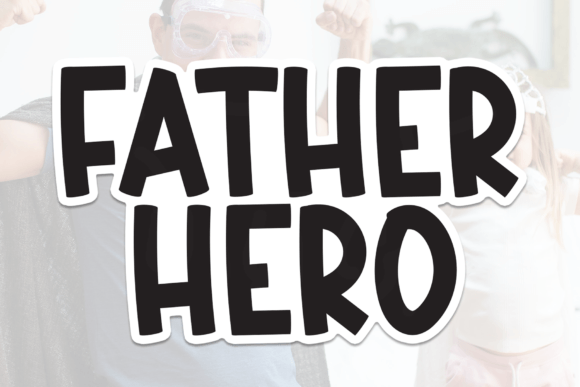
In the crowded landscape of digital typography, finding a typeface that balances personality with professional utility is often a challenge. Father Hero emerges as a standout solution, offering a fun and versatile sans-serif aesthetic that resonates across multiple design disciplines. Whether you are crafting handmade greeting cards, designing sleek digital presentations, or branding a small business, this font provides the visual flexibility needed to communicate effectively without sacrificing readability.
However, like any powerful design tool, the potential of Father Hero can be easily undermined by common usage errors. Many creators approach new fonts with enthusiasm but overlook the technical nuances required to maximize their impact. Understanding how to integrate this typeface correctly ensures your projects look polished rather than amateurish.
Understanding the Appeal of Father Hero
The primary reason designers and hobbyists gravitate toward Father Hero is its inherent versatility. It is not merely a decorative script; it is a robust sans-serif family designed to function in both casual and structured environments. The clean lines and open counters make it highly legible even at smaller sizes, while the subtle character curves inject just enough warmth to avoid the sterile feel of standard system fonts.
For entrepreneurs and marketers, this balance is crucial. A font that is too playful can undermine a brand's authority, while one that is too rigid can fail to connect emotionally with an audience. Father Hero sits comfortably in the middle ground, making it an excellent choice for logos, social media graphics, and educational materials where engagement is key. Its adaptability allows it to transition seamlessly from a bold headline on a poster to body text in a digital newsletter.
Common Pitfalls When Choosing and Using Father Hero
Despite its user-friendly nature, several mistakes frequently occur when users first adopt Father Hero. These errors often stem from a lack of understanding regarding typographic hierarchy and context. Recognizing these pitfalls early can save time and prevent the need for costly redesigns later.
Mistake 1: Overusing Bold Weights Without Hierarchy
A frequent error involves applying the boldest weight of Father Hero to every element on a page. While the bold variant is impactful, using it exclusively creates visual noise and eliminates contrast. When everything is loud, nothing stands out. This approach confuses the reader and dilutes the message you are trying to convey.
The Correction: Establish a clear visual hierarchy. Use the regular or light weights for body text and reserve the bold or extra-bold variants for headlines and key call-to-action buttons. This distinction guides the reader’s eye naturally through your content, improving both usability and comprehension.
Mistake 2: Ignoring Kerning and Spacing
Because Father Hero has a friendly, rounded character, it is tempting to pack letters tightly together to create a "chunky" look. However, poor kerning (the space between individual characters) and tracking (the overall spacing of a line) can make the text difficult to read. In digital designs, especially on mobile screens, cramped letterforms can cause eyes to strain, leading to a high bounce rate on websites or unreadable print materials.
The Correction: Always review your text at the intended viewing size. If you are using Father Hero for large display headers, you might slightly tighten the tracking for a modern look, but never compromise legibility. For body copy, ensure there is sufficient breathing room between letters and lines. A simple test is to squint at your design; if the text looks like a solid block of gray, increase the spacing immediately.
Mistake 3: Mismatching with Incompatible Typefaces
Another overlooked detail is pairing Father Hero with other fonts that clash stylistically. Because it is a sans-serif with distinct personality, pairing it with another highly stylized or overly ornate font can result in a chaotic design. Conversely, pairing it with a generic, default font like Arial without considering weight differences can make the design look unbalanced.
The Correction: Stick to complementary pairings. Father Hero works exceptionally well with clean, geometric sans-serifs for a modern look or with a classic serif font for a touch of elegance. Limit your palette to two or three typefaces maximum to maintain cohesion.
Strategic Application for Better Results
To truly leverage the strengths of Father Hero, consider the specific medium and the emotional tone you wish to project. The font's utility extends far beyond simple text replacement; it is a strategic asset for communication.
- Crafting and Greeting Cards: When creating physical goods, remember that ink absorption can alter the appearance of thin strokes. Test print your designs on the actual paper stock you plan to use. Father Hero's thicker strokes generally hold up well, but verifying the output prevents wasted materials.
- Digital Presentations: In slide decks, clarity is paramount. Use Father Hero for bullet points and section headers to keep the audience engaged. Avoid using it for dense paragraphs of data unless you are using a larger point size, as complex information requires maximum legibility.
- Branding and Logos: For small business owners, a logo must be scalable. Ensure that the version of Father Hero you select maintains its integrity when shrunk down for a favicon or enlarged for a billboard. Check the vector files for any stray anchor points before finalizing your brand assets.
Evaluating Before You Download or Buy
Before committing to Father Hero for a major project, take the time to evaluate the licensing and file quality. Not all downloads are created equal, and using a low-resolution bitmap version instead of a scalable vector font can ruin a professional presentation.
First, verify the license terms. Are you purchasing a personal license or a commercial one? Using a font commercially without the proper rights can lead to legal complications and unexpected costs down the line. Read the documentation carefully to understand what uses are permitted, such as web embedding, app integration, or merchandise printing.
Second, inspect the character set. Does the font include the special characters, ligatures, or language support you need? If you are targeting a global audience or working on a project requiring specific symbols, ensure the font file supports those requirements. Missing glyphs can force you to switch fonts mid-project, disrupting your workflow and design consistency.
Maximizing Efficiency and Satisfaction
The ultimate goal of choosing a font like Father Hero is to enhance your creative output efficiently. By avoiding common mistakes and applying best practices, you ensure that your design process remains smooth and your results are professional. Remember that typography is about more than just aesthetics; it is about facilitating communication.
When used correctly, Father Hero becomes an invisible yet powerful ally in your toolkit. It supports your message, engages your audience, and elevates the perceived quality of your work. Whether you are a beginner exploring design for the first time or a seasoned professional refining a brand identity, taking a thoughtful approach to this versatile typeface will yield superior outcomes. Take the time to test, refine, and apply these principles, and you will find that your designs not only look better but also perform better in achieving their intended goals.