Mastering the Art of Elegant Typography: The Mightype Advantage
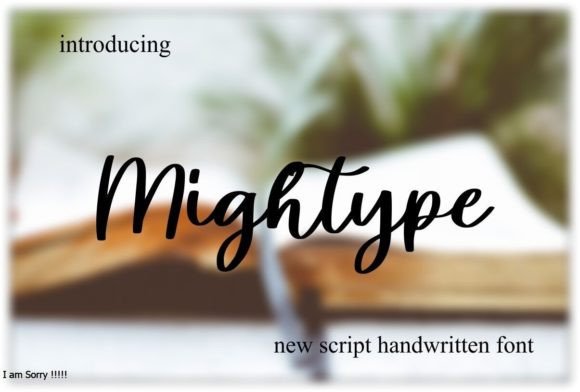
In the crowded digital landscape, where visual attention is a scarce commodity, the choice of typeface often serves as the silent ambassador for a brand's identity. While sans-serif fonts dominate user interfaces and serif fonts anchor editorial content, there remains a distinct and powerful category of typography reserved for moments that demand personality, grace, and human connection. This is the realm of script fonts, and within this niche, Mightype has emerged as a compelling solution for designers seeking to balance artistic flair with practical legibility. Unlike generic cursive styles that can sometimes sacrifice readability for ornamentation, Mightype is an elegant script font perfect for branding, invitations, and logos, offering a sophisticated alternative that resonates across diverse industries.
The journey of understanding why a specific script font like Mightype succeeds requires looking beyond mere aesthetics. It involves examining the structural integrity of the letterforms, the psychology of the curves, and the tangible impact these design choices have on audience perception. For professionals ranging from boutique business owners to high-end wedding planners, selecting the right typographic voice is not just about making text look pretty; it is about establishing trust, conveying emotion, and ensuring that a message is received exactly as intended.
The Anatomy of Sophisticated Script Design
What distinguishes a truly effective script font from a decorative novelty lies in its underlying architecture. When analyzing Mightype, one immediately notices the deliberate construction of its strokes. The font features smooth curves and flowing lines that mimic the natural movement of a hand holding a fine-nibbed pen. However, unlike many hand-lettered styles that suffer from inconsistent spacing or erratic baseline alignment, Mightype combines sophistication and readability, offering a timeless balance of beauty and functionality.
This architectural stability is crucial for professional application. In the world of graphic design, a font must be able to withstand scrutiny at various sizes. A script that looks stunning in a large header might become an illegible mess when used for body copy or small print details. Mightype addresses this challenge by maintaining open counters—the enclosed spaces within letters like 'a', 'e', and 'o'—and ensuring that ascenders and descenders do not collide in a way that creates visual clutter. This thoughtful design allows the font to remain clear even when scaled down, making it versatile enough for both grand titles and subtle signatures.
Furthermore, the rhythm of the font plays a significant role in its success. Good typography has a cadence, a visual beat that guides the eye smoothly from left to right. The flowing lines of Mightype create a sense of forward momentum without feeling rushed. This rhythmic quality is essential for creating a reading experience that feels effortless. When a viewer encounters text set in this style, they are not fighting against the shape of the letters; instead, the eye glides over the forms, absorbing the message with minimal cognitive load. This seamless interaction between form and function is what elevates Mightype from a simple decorative element to a robust communication tool.
Strategic Applications in Branding and Identity
For business owners and creative directors, the primary use case for a script font is often the creation of a memorable brand identity. Logos serve as the face of a company, and they must convey the essence of the business instantly. In sectors such as luxury goods, artisanal food and beverage, fashion, and lifestyle services, a clean geometric logo may feel too sterile or corporate. Here, Mightype offers a solution that injects warmth and approachability while retaining an air of exclusivity.
Consider a high-end bakery or a boutique perfume house. These brands rely heavily on the sensory experience they promise. A logo rendered in a stiff, blocky font fails to evoke the craftsmanship and care associated with handmade products. By contrast, a logo utilizing the elegant curves of Mightype suggests a human touch, implying that every item is crafted with attention to detail. The fluidity of the script mirrors the organic nature of the products themselves, creating a subconscious link between the visual identity and the customer's expectation of quality.
Beyond the logo itself, the font can be integrated into broader brand collateral to maintain consistency. From business cards to packaging labels, the presence of Mightype reinforces the brand narrative. It acts as a visual signature that customers come to recognize and trust. When used strategically alongside a more neutral sans-serif or serif font for informational text, it creates a harmonious hierarchy. The script draws attention to key value propositions or brand names, while the supporting typeface handles the functional details. This pairing ensures that the brand remains legible and accessible without losing its unique character.
Enhancing the Invitation Experience
While branding focuses on long-term identity, invitations require immediate emotional impact. Whether for weddings, galas, corporate retreats, or product launches, the invitation sets the tone for the entire event. In this context, Mightype shines as a versatile tool for communicating elegance and importance. The smooth curves and flowing lines naturally evoke feelings of celebration and refinement, making it an ideal choice for formal occasions.
Designers often struggle with finding a script that does not appear overly ornate or difficult to read. Traditional calligraphy can sometimes feel archaic or intimidating to modern audiences. Mightype bridges this gap by offering a contemporary interpretation of classic script styles. It retains the romanticism of traditional handwriting but updates it with cleaner lines and better spacing, ensuring that guests can easily read the date, time, and location without squinting.
The versatility of the font also extends to different mediums. On printed paper, the fine details of the strokes catch the light beautifully, adding texture and depth to the physical invite. In digital formats, such as email invitations or social media announcements, the font renders crisply on screens of all sizes. This cross-platform compatibility is vital in today's hybrid event planning landscape, where a single campaign often spans both physical mailers and digital channels. By choosing a font that performs well in both environments, organizers ensure a cohesive guest experience regardless of how the invitation is delivered.
Workflow Integration for Modern Creators
For educators, researchers, and hobbyists who dabble in design, integrating a specialized script font into their workflow can seem daunting. There is a common misconception that using scripts requires advanced technical skills or custom lettering abilities. However, the design philosophy behind Mightype prioritizes ease of use alongside aesthetic appeal. Its structure is optimized for standard design software, allowing creators to implement it seamlessly into their projects without extensive tweaking.
One of the most valuable aspects of the font for creators is its ligature support and alternate character options. In many script fonts, certain letter combinations can clash visually if the designer is not careful. Mightype anticipates these interactions, providing built-in solutions that ensure the text flows naturally. This reduces the need for manual kerning adjustments, saving valuable time during the design process. For educators creating course materials or hobbyists designing personal projects, this efficiency means they can focus more on content and creativity rather than getting bogged down in typographic minutiae.
Moreover, the font's readability makes it suitable for contexts where information density is higher than typical for scripts. While it is not intended for long-form body text, it works exceptionally well for pull quotes, chapter headings, and section dividers in reports or presentations. Researchers presenting complex data can use Mightype to highlight key findings or conclusions, adding a layer of emphasis that breaks up the monotony of standard academic formatting. The font's ability to command attention without appearing out of place demonstrates its adaptability across various professional disciplines.
Navigating Considerations and Best Practices
Despite its many advantages, the use of any script font, including Mightype, requires a degree of restraint and strategic thinking. The most common pitfall in using elegant script fonts is overuse. When a script is applied to every headline, subhead, and caption, the visual impact diminishes, and the design can quickly become chaotic. To maintain the font's effectiveness, it should be treated as an accent—a special ingredient that enhances the dish rather than overwhelming it.
Another critical consideration is color and background contrast. Because script fonts often feature thin strokes and intricate details, they require high contrast to remain legible. Placing white Mightype text on a light gray background, for example, would render the text nearly invisible. Designers must ensure that the font is placed against a solid, contrasting background or given sufficient weight to stand out. Additionally, the size of the text matters significantly. While Mightype is designed for readability, pushing it below a certain point size can compromise its clarity. Testing the font at the intended output size is always recommended before finalizing a design.
Pairing is also a fundamental aspect of successful implementation. As mentioned earlier, combining Mightype with a complementary sans-serif or serif font creates a balanced composition. The script provides the personality, while the partner font provides the structure. Avoid pairing it with another display font or a second script, as this creates competition for visual dominance. Instead, opt for a neutral, highly legible typeface that recedes slightly, allowing the elegance of Mightype to take center stage.
The Future of Human-Centric Typography
As digital interfaces continue to evolve, there is a growing trend toward "human-centric" design. Users are increasingly fatigued by the uniformity of system fonts and the cold precision of algorithmic layouts. They crave authenticity and connection, which is why fonts that emulate human handwriting are experiencing a resurgence. Mightype sits at the forefront of this movement, offering a digital representation of the analog warmth that people find comforting and engaging.
This shift is particularly evident in the rise of direct-to-consumer brands and independent creators who prioritize storytelling over corporate sterility. These entities understand that their voice is their greatest asset, and typography is a primary vehicle for expressing that voice. By adopting fonts like Mightype, they signal to their audience that they value craftsmanship, individuality, and personal connection. This is not merely a stylistic choice; it is a strategic alignment with consumer values.
Looking ahead, the demand for versatile, high-quality script fonts will likely continue to grow. As technology advances, we may see more dynamic applications of script typography, such as variable fonts that adjust their stroke width and flow based on user interaction. However, the core principles that make Mightype successful today—smooth curves, flowing lines, and a balance of beauty and functionality—will remain constant. These elements tap into a fundamental appreciation for artistry that transcends technological trends.
Ultimately, the decision to incorporate Mightype into a project is a decision to elevate the visual communication. It is a commitment to quality and a recognition that the smallest details often make the biggest difference. Whether you are launching a new brand, inviting guests to a milestone event, or simply enhancing a personal creative project, the right typography can transform a good idea into a great impression. In a world saturated with noise, the quiet confidence of an elegant script font speaks volumes, proving that sometimes, the most powerful message is the one delivered with grace.