Starshine: Elevating Creative Projects with a Distinctive Handwritten Script
In the vast landscape of digital typography, few categories command as much emotional resonance as handwritten script fonts. Among these, Starshine has emerged as a standout choice for designers and makers seeking to infuse their work with personality, elegance, and a touch of whimsy. Unlike rigid sans-serifs or traditional serifs that prioritize information delivery, Starshine is designed to mimic the fluidity of human expression. This unique handwritten script font bridges the gap between professional polish and personal warmth, making it an indispensable asset for a wide array of creative endeavors.
The Aesthetic DNA of Starshine
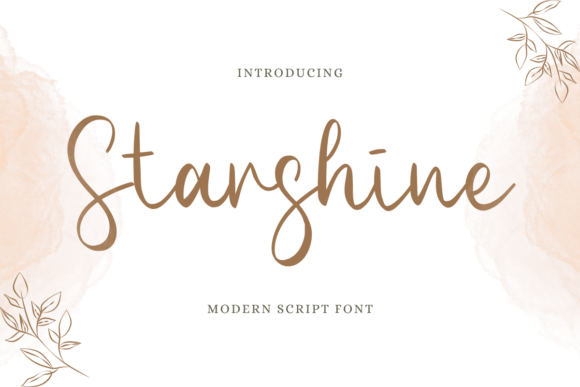
To understand why Starshine resonates so deeply with creators, one must first examine its typographic characteristics. At its core, Starshine is a fancy handwritten script font that balances legibility with artistic flair. The strokes vary in thickness, mimicking the pressure changes of a real pen on paper. This variation creates a dynamic rhythm across the text, preventing the visual monotony often found in standard typefaces.
The letterforms in Starshine feature delicate swashes and subtle flourishes that add a sense of movement without sacrificing readability. These elements are particularly effective when used for short phrases, titles, or emphasis within a larger layout. The spacing, or kerning, is optimized to ensure that even at smaller sizes, the characters remain distinct. This attention to detail makes Starshine versatile enough for both grand headlines on wall art and intimate details on personalized stationery.
Furthermore, the font includes a comprehensive set of ligatures and alternate characters. These features allow users to customize the look of specific words, ensuring that no two projects look exactly alike. For instance, a designer might choose a more elaborate version of the capital "S" for a logo but opt for a simpler variant for body text within the same design. This flexibility is crucial for maintaining brand consistency while allowing for creative experimentation.
Applications in Physical Craft and Merchandise
The true potential of Starshine becomes most apparent when applied to physical media. In the realm of crafting, where tactile quality meets visual appeal, this font serves as a powerful tool for transformation. Consider the booming market of custom stickers. Stickers are often used to decorate laptops, water bottles, and journals, serving as miniature expressions of identity. When a quote or name is rendered in Starshine, the sticker instantly gains a premium feel. The organic curves of the script contrast beautifully with the clean edges of die-cut vinyl, creating a product that feels handcrafted rather than mass-produced.
Similarly, the world of apparel printing benefits significantly from the use of fancy handwritten scripts. T-shirts and tote bags often suffer from generic, blocky typography that fails to convey emotion. By utilizing Starshine for slogans or motivational quotes, creators can produce garments that feel like wearable art. The font's natural flow suggests a personal message, as if the wearer wrote the sentiment themselves. This psychological connection can be a decisive factor for consumers browsing online marketplaces, where uniqueness drives sales.
For those involved in embroidery, Starshine offers another layer of utility. Embroidery machines translate digital files into physical stitches, and the complexity of the font matters greatly. While some overly ornate scripts can become muddy when stitched, Starshine is engineered with clear stroke definitions. This ensures that even intricate designs maintain their integrity when translated into thread. Whether it is a monogram on a wedding invitation or a logo on a team uniform, the font holds up well under the scrutiny of close-up inspection.
Digital Workflows and Vector Scalability
Beyond physical crafts, Starshine plays a pivotal role in digital design workflows, particularly for SVG (Scalable Vector Graphics) creation. In the era of digital fabrication, tools like Cricut and Silhouette dominate the hobbyist and small business markets. These machines rely on vector paths to cut materials precisely. Starshine is available in formats that convert seamlessly into high-quality SVGs, ensuring that every curve remains smooth regardless of how large the final output is scaled.
This scalability is essential for projects ranging from small planner stickers to massive wall decals. A common pitfall in digital design is pixelation; when a raster image is enlarged, it loses clarity. However, because Starshine is a vector-based font, it retains crisp edges at any size. This characteristic allows educators and researchers to create posters for classrooms or conferences without worrying about resolution issues. The font can be projected onto a screen for a presentation or printed on a billboard, maintaining its aesthetic integrity throughout.
Moreover, the integration of Starshine into graphic design software such as Adobe Illustrator, Canva, or Procreate is straightforward. Designers can manipulate individual letters, adjust tracking, and apply effects like gradients or shadows to enhance the visual impact. For example, a social media manager might use Starshine to create engaging Instagram stories, overlaying the text on photos to add a personal touch. The font's versatility supports a wide range of color palettes, from soft pastels suitable for baby showers to bold neons for modern event flyers.
Strategic Use in Branding and Marketing
For business owners and entrepreneurs, selecting the right typography is a strategic decision that influences brand perception. Starshine offers a distinctive voice that can help a brand stand out in crowded markets. Its handwritten nature evokes trust and approachability, qualities that are highly valued in industries such as wellness, education, and artisanal food. A bakery using Starshine for its menu board or packaging immediately signals a commitment to homemade quality and care.
However, successful implementation requires a nuanced understanding of hierarchy. While Starshine is visually striking, it is best used for headlines, logos, or accent text rather than long paragraphs. Overusing a fancy handwritten script can lead to visual fatigue and reduce readability. Professional designers often pair Starshine with a clean, neutral sans-serif font to create a balanced composition. This combination leverages the emotional appeal of the script while ensuring that critical information is communicated clearly.
Consider the application of Starshine in card design. Greeting cards are a medium where sentiment is paramount. Whether it is a birthday wish, a thank-you note, or a condolence message, the choice of font sets the tone. Starshine adds a layer of sincerity that pre-printed messages often lack. It transforms a standard card into a keepsake, encouraging the recipient to hold onto it longer. This extended engagement increases the likelihood of the brand being remembered and recommended to others.
Practical Considerations for Implementation
While the advantages of Starshine are numerous, creators should also consider practical aspects of its usage. Licensing is a primary concern for professionals. Ensuring that the font license covers the intended use—whether for personal projects, commercial merchandise, or web display—is essential to avoid legal complications. Most reputable font distributors offer clear licensing tiers that accommodate everything from individual crafters to large corporations.
Additionally, file management is crucial when working with script fonts. Because Starshine includes various alternates and ligatures, it is important to save design files in a format that preserves these features. Using vector formats like EPS or AI alongside the final SVG ensures that the project can be edited later without losing the font's unique characteristics. For teams collaborating on a project, embedding the font or outlining the text before sharing files prevents substitution errors on different operating systems.
Accessibility is another consideration, particularly for digital applications. While Starshine is beautiful, its decorative nature may pose challenges for users with visual impairments. In digital contexts where accessibility standards are mandatory, it is advisable to use Starshine sparingly and ensure that critical text is provided in a more accessible alternative. Balancing aesthetics with inclusivity demonstrates a commitment to ethical design practices.
Trends and Future Relevance
Looking ahead, the demand for authentic, human-centric design elements shows no sign of waning. As artificial intelligence generates increasingly perfect and sterile content, there is a growing appreciation for imperfections and organic textures. Starshine aligns perfectly with this trend, offering a digital solution that feels undeniably human. Its ability to adapt to various styles, from vintage-inspired botanical prints to modern minimalist layouts, ensures its longevity in the design toolkit.
Educators and researchers are also finding new ways to utilize such fonts in their work. In educational materials, using a friendly script like Starshine can make complex topics feel more approachable for younger students. It breaks down the formality of academic texts, fostering a more engaging learning environment. Similarly, in research presentations, a well-placed title in Starshine can capture the audience's attention and set a welcoming tone for the discussion.
Ultimately, Starshine represents more than just a collection of letters; it is a vehicle for storytelling. Whether you are a hobbyist creating custom planners, a business owner designing t-shirts, or a professional crafting wall art, this fancy handwritten script font provides the means to express your unique vision. By understanding its characteristics, leveraging its versatility, and applying it thoughtfully, creators can elevate their projects from ordinary to extraordinary, leaving a lasting impression on their audience.