Evaluating the Happy Selfie Font for Design Projects
In the realm of digital typography, selecting the right typeface is a critical decision that influences readability, brand perception, and overall aesthetic appeal. Happy Selfie has emerged as a notable option within the category of handwritten display fonts. Designed to mimic the natural flow of casual handwriting, this typeface offers a distinct visual character that appeals to specific design niches. For designers, marketers, and content creators, understanding the functional capabilities and limitations of Happy Selfie is essential before integrating it into a project workflow.
Understanding the Characteristics of Happy Selfie
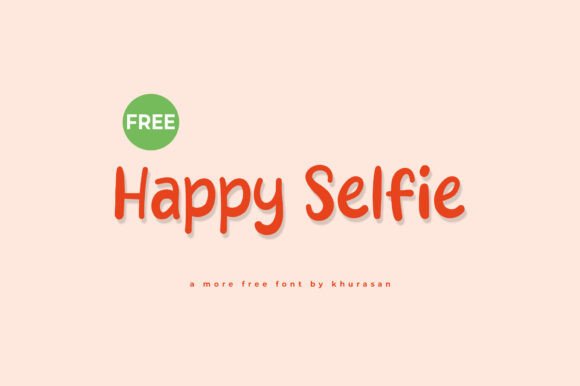
Happy Selfie is classified as a modern, cute handwritten font. Its structure is defined by rounded edges, varying stroke widths, and a playful baseline that simulates the imperfections of human penmanship. Unlike rigid geometric sans-serifs or traditional serifs, this font prioritizes approachability and warmth. The letterforms are designed to appear friendly and informal, making them visually distinct in crowded information environments.
The technical construction of Happy Selfie includes a comprehensive set of glyphs intended to support standard English text, though its primary strength lies in short-form applications. The spacing between characters (kerning) is generally loose, contributing to an airy and relaxed feel. This structural looseness is intentional, aiming to replicate the spontaneity of a quick note or a personal greeting rather than the precision of legal documentation.
Reasons to Consider This Typeface
Designers often seek out Happy Selfie when their project goals align with themes of joy, creativity, and personal connection. The font's inherent "cuteness" makes it a strong candidate for industries targeting younger demographics or those focused on lifestyle and wellness. Specific reasons for interest include:
- Emotional Resonance: The handwritten style triggers a psychological response associated with authenticity and human touch, which can be valuable for brands trying to build trust.
- Visual Hierarchy: In layouts dominated by structured block text, Happy Selfie serves as an excellent accent element to draw attention to headlines or call-to-action buttons.
- Versatility in Decorative Contexts: Its flexible nature allows it to adapt well to curved paths, banners, and organic shapes without losing legibility at larger sizes.
Benefits and Tradeoffs
While Happy Selfie offers distinct aesthetic advantages, it is important to weigh these against practical tradeoffs. The primary benefit is its ability to soften the tone of a design. A corporate logo or a magazine cover utilizing this font immediately signals a departure from formality, inviting the viewer into a more casual interaction. It excels in creating a sense of intimacy, making it suitable for projects that require a personal voice.
However, the tradeoffs are significant regarding functionality. Because the font mimics handwriting, it lacks the uniformity required for extended reading. The irregularity of the letterforms can cause eye strain if used for body copy or paragraphs exceeding a few lines. Additionally, the "cute" aesthetic may not align with serious, authoritative, or high-stakes messaging. Using Happy Selfie for financial reports, medical warnings, or legal terms would likely undermine the credibility of the content.
Considerations for Implementation
When evaluating Happy Selfie, designers should consider the medium of delivery. On digital screens, particularly mobile devices, the font must be sized appropriately to ensure the intricate details of the strokes remain visible. If the font is rendered too small, the ligatures and flourishes may blur, reducing readability. Furthermore, pairing this font requires careful selection; it works best when contrasted with a clean, neutral sans-serif or serif font that handles the informational load while Happy Selfie provides the stylistic flair.
Situations Where Happy Selfie Is a Strong Fit
There are specific scenarios where Happy Selfie performs exceptionally well. These situations typically involve short bursts of text where personality is the primary objective. Ideal use cases include:
- Posters and Event Flyers: For workshops, parties, or community events where a welcoming atmosphere is desired, this font sets the correct mood instantly.
- Logos for Lifestyle Brands: Boutique shops, bakeries, children's products, and creative agencies often benefit from the unique identity this typeface provides.
- Social Media Graphics: In feeds saturated with rigid templates, Happy Selfie stands out as organic and engaging, increasing the likelihood of user interaction.
- Book Covers for Children or Romance: The genre conventions for these books often rely on warm, inviting typography to signal the content to potential readers.
- Banners and Signage: When used for temporary signage or decorative banners, the font adds a layer of festivity and informality.
When Alternatives May Be Worth Considering
Despite its charm, Happy Selfie is not a universal solution. There are several contexts where alternative typefaces are superior choices. If the project requires high legibility across various screen sizes, a dedicated UI font or a standard sans-serif is preferable. Similarly, if the brand identity relies on professionalism, stability, or luxury, the playful nature of Happy Selfie might create a dissonance that confuses the audience.
Furthermore, for multilingual projects, it is crucial to verify the character set. While many modern fonts support Unicode, some specialized handwritten styles may lack accents or characters necessary for languages other than English. In such cases, a more robust font family with broader language support would be a safer investment. Additionally, if the design involves dense data visualization or technical diagrams, the decorative elements of this font could obscure critical information.
Practical Decision-Making Insights
To determine if Happy Selfie aligns with your specific goals, apply a simple evaluation framework. First, define the primary emotion you wish to evoke. If the answer is "joy," "friendliness," or "creativity," proceed with testing the font. Second, estimate the volume of text. If the application involves more than 50 words of continuous text per section, reconsider using this font for the body and reserve it for headers only.
Third, test the font in context. Create a mock-up combining Happy Selfie with your chosen secondary font. Observe how they interact at different scales. Does the handwritten style overpower the supporting text? Is the contrast sufficient? Finally, consider the longevity of the design. Trends in typography shift, but the core principle of readability remains constant. Ensure that the choice of Happy Selfie enhances the message rather than distracting from it.
In conclusion, Happy Selfie is a valuable tool for designers seeking to inject personality and warmth into their work. Its suitability depends entirely on the alignment between the font's playful characteristics and the project's communication objectives. By understanding its strengths in decorative applications and recognizing its limitations in functional text, creators can make informed decisions that result in effective and aesthetically pleasing designs.