Evaluating the Take a Break Font: A Practical Guide for Designers
In the crowded landscape of digital typography, finding a typeface that balances personality with readability is often a challenge. The Take a Break font has emerged as a notable option for designers seeking a handwritten aesthetic without sacrificing clarity. Characterized by its sweet and minimalist style, this typeface offers a distinct approach to script design. However, before integrating it into a project, it is essential to understand its specific attributes, how it compares to other categories of handwriting fonts, and the contexts where it delivers the most value.
Defining the Aesthetic and Structure of Take a Break
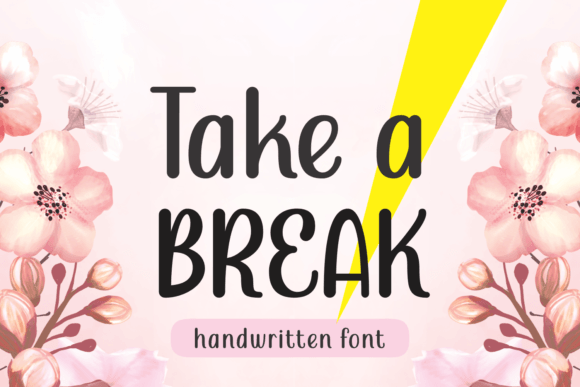
At its core, Take a Break is designed to mimic the natural flow of human handwriting while maintaining a level of geometric consistency that ensures legibility. Unlike many script fonts that rely on excessive flourishes or dramatic variations in stroke weight, this font embraces a cleaner, more restrained look. The "minimalist" aspect of its description is not merely marketing language; it refers to the absence of decorative ligatures and complex swashes that can clutter a layout.
The distinctiveness of Take a Break lies in its ability to convey warmth without appearing childish. The letterforms are rounded and soft, creating an immediate sense of friendliness. This makes it particularly effective for projects that require a personal touch but must still maintain a degree of professionalism. The spacing between characters is generally open, which prevents the text from becoming difficult to read at smaller sizes—a common pitfall with many casual script fonts.
When evaluating the technical construction, one notices that the font retains a consistent baseline. This stability allows it to function well in both short headlines and slightly longer body copy, provided the line height is managed correctly. The handcrafted appeal is evident in the slight irregularities of the strokes, which add character without compromising the overall alignment of the text.
Comparing Minimalist Scripts to Traditional Handwriting Fonts
To make an informed decision, it is helpful to compare Take a Break against other common categories of handwriting typefaces. The market is saturated with scripts that range from formal calligraphy to messy, marker-style doodles. Understanding where this font fits within that spectrum is crucial for determining its suitability.
Traditional Calligraphic Scripts
Fonts modeled after formal calligraphy often feature high contrast between thick and thin lines and extensive connecting strokes. While elegant, these can be difficult to read in large blocks of text and may feel too stiff for casual projects. In contrast, Take a Break offers a lower-contrast, disconnected, or loosely connected style that feels more approachable. If a project requires a sense of history or luxury, a traditional calligraphic font might be superior. However, for modern, friendly communication, the simplicity of Take a Break is often more effective.
Playful and Messy Doodles
On the opposite end of the spectrum are fonts designed to look like quick scribbles or children's writing. These are excellent for emphasizing fun but can undermine credibility if used inappropriately. Take a Break sits comfortably in the middle ground. It possesses a playful vibe but avoids the chaotic nature of doodle fonts. This balance makes it a safer choice for adults aged 20–50 who want to inject personality into their designs without risking a perception of unprofessionalism.
Modern Geometric Sans-Serifs
While not a direct competitor in terms of style, it is worth noting when a designer might choose a clean sans-serif over a handwritten font. Sans-serifs offer maximum neutrality and readability. If the primary goal is information density and strict corporate branding, a sans-serif is usually the better tool. Take a Break should be reserved for moments where emotional connection and a human element are prioritized over pure data transmission.
Strengths and Tradeoffs in Practical Application
Every typeface comes with inherent strengths and limitations. For Take a Break, the primary strength is its versatility across various creative endeavors. Its simplicity allows it to pair well with a wide range of secondary fonts, from bold block letters to delicate serifs. This flexibility reduces the cognitive load on the designer, as the font rarely clashes with other elements in a layout.
Key Strengths:
- Legibility: The clear structure ensures that messages are easily understood, even at moderate sizes.
- Emotional Resonance: The sweet style naturally evokes feelings of comfort and approachability.
- Adaptability: Works effectively in both print and digital formats due to its clean rendering.
- Pairing Potential: Complements almost any other font family without overpowering the hierarchy.
Potential Tradeoffs:
- Lack of Formality: It is not suitable for legal documents, financial reports, or serious news publications.
- Limited Stylistic Variety: Because it is minimalist, it lacks the dramatic flair needed for high-fashion or avant-garde editorial work.
- Size Constraints: While readable, it may lose its charm if scaled down too small for fine print details.
Ideal Use Cases and Best-Fit Scenarios
Determining when to use Take a Break involves analyzing the intended audience and the message being conveyed. The font excels in scenarios where the goal is to create a cute and friendly atmosphere. It is particularly well-suited for personal stationery, wedding invitations, birthday cards, and greeting cards. In these contexts, the handcrafted appeal adds a layer of sincerity that pre-made templates often lack.
Beyond personal projects, the font finds a strong home in lifestyle branding. Businesses focused on wellness, parenting, handmade crafts, or boutique retail often benefit from the warm, inviting tone of Take a Break. For example, a local bakery using this font for its menu headers can instantly communicate a sense of homemade quality and care. Similarly, a yoga studio might use it for class schedules to reinforce a relaxed, non-intimidating environment.
Social Media Graphics: With the rise of visual content on platforms like Instagram and Pinterest, there is a high demand for typography that looks authentic. Take a Break performs well here, allowing creators to overlay text on photos without the text looking too rigid or computer-generated.
Product Packaging: For small-batch products, such as candles, soaps, or artisanal foods, this font can serve as a label element that distinguishes the product as unique and personally curated.
When to Consider Alternatives
Despite its charms, Take a Break is not a universal solution. There are specific situations where opting for a different typeface would yield better results. If the project demands a sense of urgency, authority, or technological sophistication, a minimalist script may send the wrong signal. For instance, a cybersecurity firm or a medical research journal would likely find this font too casual and potentially distracting.
Furthermore, if the design relies heavily on long paragraphs of text, a dedicated serif or sans-serif body font is a better choice. While Take a Break is readable, extended reading in a script style can cause eye fatigue. In such cases, it is best to reserve the font for headlines, pull quotes, or accent phrases, pairing it with a highly legible companion font for the main content.
Designers should also consider the cultural context of their audience. While the "cute and friendly" vibe is widely appreciated, some demographics or industries may perceive it as overly juvenile. In these instances, a more mature script or a clean display font might be a more appropriate alternative.
Decision Factors for Selecting the Right Typeface
When finalizing a design, the decision to use Take a Break should be based on a few key factors. First, assess the emotional tone required. Does the project need to feel human, warm, and accessible? If yes, this font is a strong contender. Second, evaluate the medium. Will the text be viewed on a screen or printed on textured paper? The font's clean lines ensure it translates well across both, but testing at the final output size is always recommended.
Third, consider the hierarchy. Can the font stand out against your chosen background colors and imagery? Because Take a Break is relatively light in weight, it may require careful consideration of contrast to ensure visibility. Finally, think about longevity. Trends in typography shift, but the minimalist, handcrafted style of this font aligns with a broader movement toward authenticity in design, suggesting it will remain relevant for years to come.
Ultimately, the choice depends on the specific goals of the project. Take a Break offers a delightful and playful vibe that can elevate simple designs into something memorable. By understanding its strengths and recognizing its limitations, designers can leverage its lovable, handcrafted appeal to create work that resonates deeply with their audience.